|
|
中文导读
在科特迪瓦 (Côte d’Ivoire) 的托拉村 (Torla village) 边缘,亚当·瓦塔拉 (Adam Ouattara) 和 马孔戈·特拉奥雷 (Makongo Traoré) 夫妇育有四个孩子,并拥有一个家。他以放牧牛群为生,而她则在附近的一小块土地上种植蔬菜。然而,多年来,旱季却让他们的这两种生计相互冲突,矛盾重重。
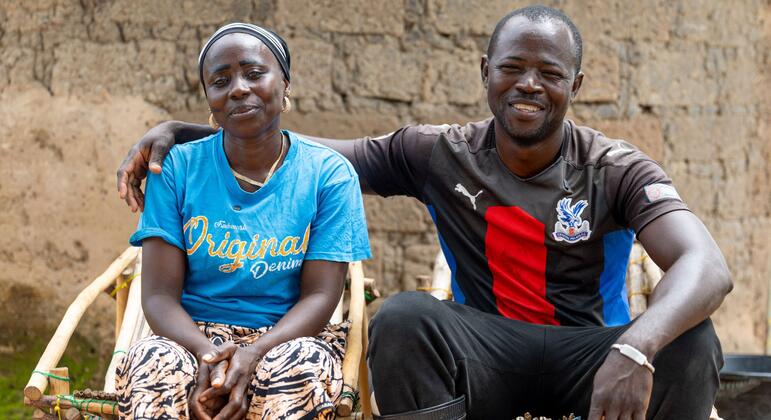
原文原文 / Original TextGiving a dam: Cultivating peace in Côte d’Ivoire © IOM Makongo Traoré and Adam Ouattara sit together not far from her plot of land where she grows aubergines, okra and tomatoes in Côte d’Ivoire. Facebook Twitter Print Email
Adam Ouattara and Makongo Traoré have four children and a home on the edge of Torla village in Côte d’Ivoire. He herds cattle. She grows vegetables on a small plot nearby. For years, the dry season pitted their two livelihoods against each other.
As grazing land and water points dried up, Mr. Ouattara and other herders have had to push their cattle farther from the village, often straight through cultivated fields.
Damaged crops led to disputes with farmers, a familiar dry-season strain across much of northern Côte d’Ivoire, where seasonal pastoral movement and expanding farmland increasingly compete for the same ground.
“When resources become scarce, everyone is trying to protect their livelihood,” said Mr. Ouattara, who has led the local herders association since 2021, representing pastoralists in disputes and community talks.
A rehabilitated agropastoral dam, completed this August, is changing that math. The dam now holds more water and releases it more reliably through the dry months, for livestock and irrigation alike.
For Mr. Ouattara, the shift shows up in fewer confrontations. “Today, we sit together and discuss,” he said. “There are fewer conflicts.”
For Ms. Traoré, it shows up in her fields. A steady water supply has let her expand her vegetable plot – work she says now supports her children’s schooling. The maths is easy.
本文为英文资讯,中文内容由机器翻译生成,仅供参考。详情请阅读文末原文。
—— 资讯转载说明 ——
本文由非洲论坛根据公开信息整理,供中国读者查阅,不代表本站立场。
来源:UN News Africa (https://news.un.org/en/news/region/africa)
原文链接:https://news.un.org/feed/view/en/story/2026/10/1168568
转载请遵守原发布方版权与引用规定。 |
|


 发表于
发表于