|
|
#尼日利亚
中文导读
行业领域 (Verticals) 创业公司 (Startups) 生活与职场 (Life and Work) 财经 (Money) 企业与政策 (Enterprise/Policy) 专栏 (Columns) 投资者问答 (Ask an Investor) 焦点关注 (Centre Stage) 咖啡访
关注我们:
X (X平台)
LinkedIn (领英)
TikTok (抖音国际版)
WhatsApp (瓦次普)
Facebook (脸书)
Instagram (照片墙)
YouTube (优兔)
LinkedIn (领英)
TikTok (抖音)
WhatsApp (瓦茨阿普)
Facebook (脸书)
Instagram (照片墙)
YouTube (优兔/油管)
Verticals (垂直领域)
市场情报仪表盘
原文原文 / Original TextVerticals StartupsLife and WorkMoneyEnterprise/Policy Columns Ask an InvestorCentre StageCoffee WithDay 1-1000Delve into AIDigital NomadsFollow the MoneyJourneysMy Life in TechNewsletter
XLinkedInTikTokWhatsAppFacebookInstagramYouTubeFollow us
XLinkedInTikTokWhatsAppFacebookInstagramYouTubeVerticals
Market Intel Dashboard
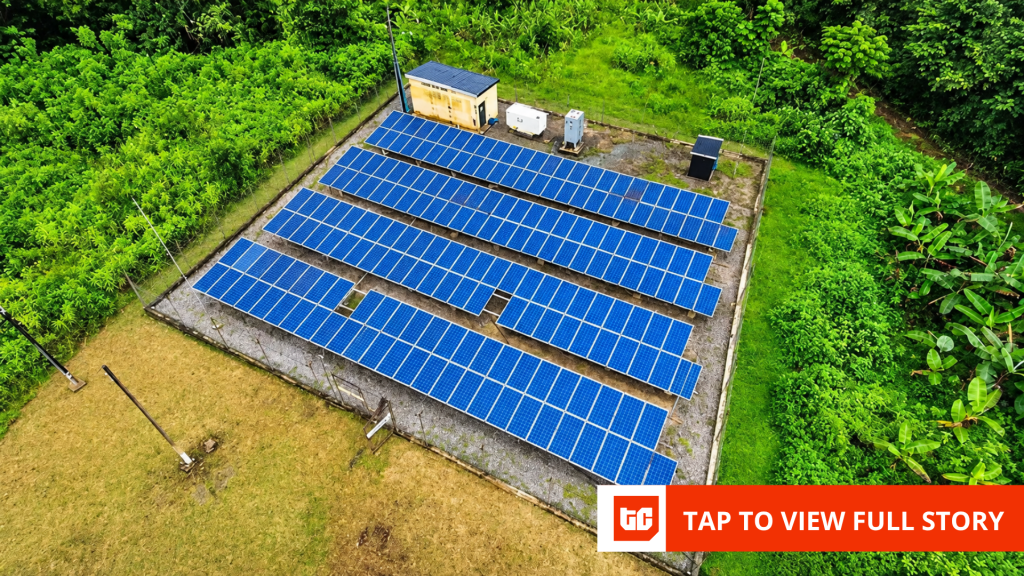
Nigeria has demonstrated that distributed renewable energy can successfully expand electricity access beyond the national grid. Through the Nigeria Electrification Project (NEP), private developers built 180 solar hybrid mini-grids across 23 states, connecting over 146,000 households and deploying 19.2MW of renewable capacity. However, the fundamental challenge is no longer technical viability—it is securing sustainable, scalable financing.
Despite these advancements, as of 2024, only 62.5% of Nigeria’s population had access to electricity. This leaves over 80 million people unserved, highlighting the immense gap that distributed mini-grids must fill.
Beyond those completely without grid connection, millions more suffer from unreliable power, incurring massive self-generation costs. The National Bureau of Statistics’ (NBS) 2024 Residential Energy Demand-Side Survey found that surveyed households spent ₦327.05 billion ($246.3 million) on petrol and diesel generators, compared to ₦175.05 billion ($131.8 million) on grid electricity—underscoring a vast, misallocated pool of spending that could instead support renewable energy infrastructure.
This economic reality makes closing the financing gap critical: unlocking commercial capital for distributed energy could reduce reliance on expensive fuel with cleaner, more predictable power.
本文为英文资讯,中文内容由机器翻译生成,仅供参考。详情请阅读文末原文。
—— 资讯转载说明 ——
本文由非洲论坛根据公开信息整理,供中国读者查阅,不代表本站立场。
来源:TechCabal Africa (https://techcabal.com/)
原文链接:https://techcabal.com/2026/09/28/nigerias-minigrid-problem/
转载请遵守原发布方版权与引用规定。 |
|


 发表于 2026-9-18 22:46:34