|
|
#非洲
From Yanbu to Sohar: Tracking Saudi Arabia’s alternative oil routes
原文原文 / Original Textplay Live Sign upShow navigation menuNavigation menuNewsShow more news sectionsAfricaAsiaUS & CanadaLatin AmericaEuropeAsia PacificMiddle EastExplainedSportOpinionVideoMoreShow more sectionsFeaturesEconomyHuman RightsClimate CrisisInvestigationsInteractivesIn PicturesScience & TechnologyPodcastsTravelSponsored Contentplay Live Click here to searchsearchSign upNavigation menucaret-leftUS-Israel war on IranStrait of HormuzDid Iran capture a US submarine?Why have strikes resumed?Al Jazeera Original
Listen (12 mins)Save
xwhatsapp-strokecopylinkgoogleAdd Al Jazeera on Googleinfo(Al Jazeera)By Hanna DuggalPublished On 17 Sep 202617 Sep 2026Saudi Arabia’s oil exports took another blow last week when drone attacks knocked out part of the country’s East-West pipeline, halting oil flow and removing 4-5 million barrels per day (bpd) of oil from global supply.
It is unclear how long repairs will take, although The Associated Press estimates three to five weeks, citing two regional officials.
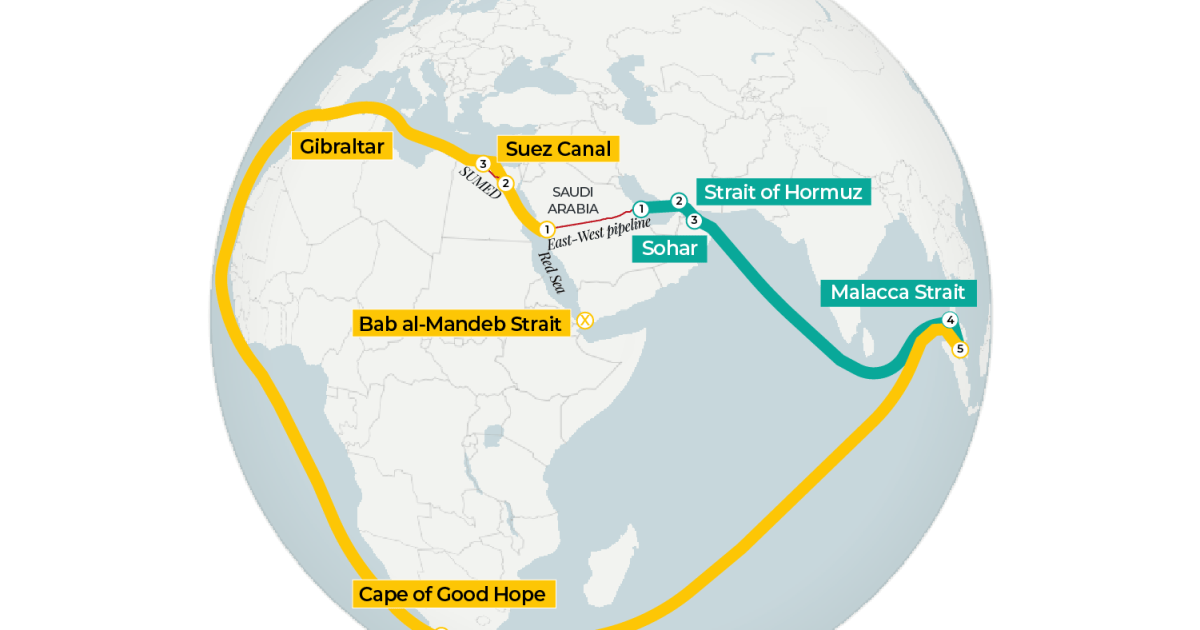
The 1,200km (746-mile) pipeline connects the kingdom’s main oil-producing fields in the east of the country with Yanbu port on the Red Sea coast in the west, allowing Saudi crude to bypass the Strait of Hormuz, which has largely remained closed since the United States-Israel war on Iran began on February 28.
As the world’s second-largest oil producer, Saudi Arabia’s ability to keep crude flowing has significant consequences for global energy markets. Al Jazeera asked experts what alternatives remain, how the disruption could affect buyers worldwide, and what it means for the kingdom’s revenues.
Total Saudi crude loadings, which topped 7.5 million bpd in January and February, had fallen to about 2.3 million bpd in August and roughly 2.1 million bpd in the first half of September – a drop of more than 70 percent.
Analysts caution the real loadings figure may run somewhat higher, since shuttle tankers crossing Hormuz with tracking switched off aren’t always captured in vessel data.
本文为英文资讯,中文内容由机器翻译生成,仅供参考。详情请阅读文末原文。
—— 资讯转载说明 ——
本文由非洲论坛根据公开信息整理,供中国读者查阅,不代表本站立场。
来源:Al Jazeera Africa (https://www.aljazeera.com/africa/)
原文链接:https://www.aljazeera.com/news/2026/9/17/from-yanbu-to-sohar-tracking-saudi-arabias-alternative-oil-routes?traffic_source=rss
转载请遵守原发布方版权与引用规定。 |
|


 发表于 2026-9-17 12:49:28